- Cuenca's old town is a UNESCO World Heritage Site perched between two river gorges
- The Hanging Houses contain a museum of Spanish abstract art
- High-speed trains from Madrid take roughly an hour
- Ciudad Encantada and the Serranía de Cuenca are great for nature lovers
- Airports
- Madrid-Barajas (MAD) or Valencia (VLC)
- Best time to go
- April-June and September-October
- Type
- Province
Cuenca is one of the most spectacular cities in Spain. Its medieval old town sits on a narrow ridge between the gorges of the Júcar and Huécar rivers, with houses built right up to the edge of the cliffs and, in the case of the famous Casas Colgadas, hanging over it. The upper town is a UNESCO World Heritage Site and a delight to wander.
The province is wild and thinly populated, with the pine-covered Serranía de Cuenca, strange limestone formations, the source of the River Cuervo and castles on the plains of La Mancha. Cuenca is part of the Castilla-La Mancha region and sits between Madrid and Valencia. See our Spain guide for more.
Things to do
- Casas Colgadas – the Hanging Houses, with wooden balconies projecting over the Huécar gorge. Inside one is the Museum of Spanish Abstract Art, with works from the 1950s and 1960s.
- San Pablo bridge – an iron footbridge across the gorge, with the best view of the Hanging Houses. Not one for those afraid of heights.
- Cuenca Cathedral – an early Gothic cathedral with Anglo-Norman influences and modern stained-glass windows.
- Upper town walk – climb from Plaza Mayor up Calle Alfonso VIII and along the ridge to the castle ruins and viewpoints over both gorges.
- Ciudad Encantada – the Enchanted City, a natural park of limestone rocks eroded into odd shapes, around 30 minutes' drive from the city.
- Serranía de Cuenca – pine forests, canyons and the source of the River Cuervo, where water cascades over mossy rocks.
- Segóbriga – a Roman site with a theatre, amphitheatre and baths in the south-west of the province.
- Belmonte and Alarcón – two of the finest castles in La Mancha. Alarcón's castle sits on a loop of the Júcar and is now a parador.
Where to stay
| Area | Why stay there |
|---|---|
| Upper old town | Stunning views and atmosphere, though steep streets and limited parking |
| Lower town (new town) | Easier access, more restaurants and quicker to reach by bus |
| Serranía villages | Rural stays for walking and the River Cuervo |
| Alarcón | A castle stay on the way between Madrid and Valencia |
Getting there
Fly to Madrid or Valencia, both with plenty of UK flights. High-speed trains take roughly an hour from Madrid and about an hour from Valencia to Cuenca Fernando Zóbel station, a short bus ride from the city. By car it is about 2 hours from Madrid and a little more from Valencia. A car is needed for Ciudad Encantada and the Serranía.
Best time to visit
Spring and autumn are ideal, with mild weather and colour in the gorges and forests. Summer is warm but less extreme than lower La Mancha, and winters are cold. Cuenca's Holy Week is well known for its processions and its religious music week, which draws musicians from around the world.
Visit the gorges at sunset, when the low light turns the Hanging Houses and cliffs gold.
Top attractions in Cuenca
 Landmark
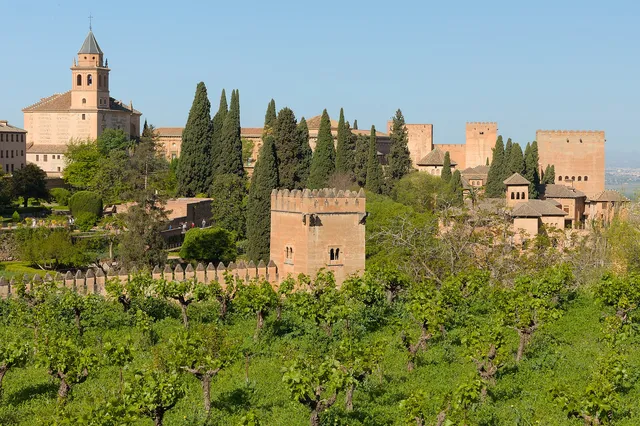
Alhambra
A hilltop palace-fortress of carved stucco, tiled courtyards and water gardens, the Alhambra is the high point of…
 Landmark
Park Güell
Gaudí's hillside park of mosaic benches, gingerbread-style lodges and a famous dragon, with sweeping views over…
 Museum
Prado Museum
One of the world's great art museums, the Prado holds Spain's royal collection, from Velázquez's Las Meninas to Goya's…
 Landmark
Real Alcázar
A dazzling Mudéjar palace and gardens in the heart of Seville, still used by the Spanish royal family and famous as the…
 Landmark
Sagrada Família
Gaudí's unfinished basilica, with its forest-like nave and glowing stained glass, is Barcelona's must-book sight.
 Nature
Serra de Tramuntana
A UNESCO-listed mountain range of stone villages, olive terraces and hairpin roads along Mallorca's north-west coast.
Cuenca on the map
Frequently asked questions
Can I visit Cuenca as a day trip from Madrid?
Yes, thanks to the fast train, though staying overnight lets you enjoy the old town after the day-trippers leave.
Are the Hanging Houses open to visitors?
Yes. Two of them house the Museum of Spanish Abstract Art, and you can see the balconies from the bridge and viewpoints at any time.
Is Ciudad Encantada worth it?
Yes, especially with children or as part of a drive into the Serranía. A walking circuit of an hour or two takes you past the main rock formations.
What should I eat in Cuenca?
Try morteruelo, a rich game pâté, and alajú, a honey and almond sweet.
Written by
Emma City breaks & deals editor
Emma plans city breaks the way other people plan the weekly shop: on a budget, with a spreadsheet and a backup plan. She covers city guides and deal-hunting.
More from EmmaWe research every guide carefully, but prices, opening times and timetables change. Check them shortly before you travel. Links to our booking partners are affiliate links.