- Tram line 2 links the airport with the centre and port in around 25-30 minutes; an airport return ticket costs €10 (2026)
- Stay near Vieux Nice or the seafront to walk everywhere
- Cheap local trains and buses reach Monaco, Villefranche, Antibes and Cannes
- Beaches are pebbly, so pack water shoes
- Airports
- Nice Côte d'Azur (NCE)
- Best time to go
- May-June and September-October
- Type
- City
Nice is the capital of the French Riviera and the easiest way into it. The city curves around the Baie des Anges, with the palm-lined Promenade des Anglais on one side and the pastel lanes of the old town on the other, and the Alps rising behind. It has excellent museums, a buzzing food market and famously sunny weather, yet it is only around two hours' flight from London.
Nice also makes a superb base for the rest of the Côte d'Azur. Monaco, the hill village of Èze, Villefranche-sur-Mer, Antibes and Cannes are all reachable by train or bus in under an hour, so you can see a lot without a car. Here is how to plan it. For the rest of the country, see our France guide.
Why go
Nice has the glamour of the Riviera without being as precious as Cannes or as pricey as Monaco. Its seafront and resort architecture are a UNESCO World Heritage Site, recognised as a historic winter resort town for wealthy travellers, including many Britons, who gave the Promenade des Anglais its name. Add Italian-influenced Niçoise cooking, the art of Matisse and Chagall and a mild winter climate, and it is a city break that works in almost any season.
Where to stay
- Vieux Nice (old town) – a tangle of narrow lanes, baroque churches, markets and bars. Atmospheric and central, but lively at night and difficult with a car.
- Promenade des Anglais – the seafront boulevard, lined with grand hotels such as the Negresco. Sea views and beach access, at a price.
- Carré d'Or and the New Town – the smart streets behind the seafront near Place Masséna, with good shopping and restaurants.
- Port Lympia – the old harbour east of Castle Hill, with a local feel, good seafood and the tram to the airport.
- Jean-Médecin and the Musicians' Quarter – central, well connected and better value, close to the main station for day trips.
- Cimiez – a leafy, residential hill with Roman ruins and the Matisse Museum. Quiet and elegant, but a bus ride from the beach.
If you plan lots of day trips, stay within a short walk of Nice-Ville station or a tram line 1 or 2 stop. It makes the early starts to Monaco or Cannes far easier.
Top things to do
- Promenade des Anglais – walk, cycle or skate along the 7km seafront. Grab one of the famous blue chairs and watch the sea.
- Vieux Nice and Cours Saleya – the flower and produce market runs most mornings (with an antiques market on Mondays). Try socca, a crispy chickpea pancake, from a street stall.
- Castle Hill (Colline du Château) – climb the steps or take the lift for the classic view over the bay, the old town and the port.
- Matisse Museum – in a red Genoese villa in Cimiez, near the artist's grave and the Roman arena.
- Marc Chagall National Museum – a calm, purpose-built museum for his biblical paintings.
- The beaches – the city beaches are free and pebbly; private beach clubs rent sun-loungers and parasols by the day.
- Place Masséna and the Promenade du Paillon – the black-and-white square and the long park with fountains and play areas.
- The port – colourful boats, seafood restaurants and the walk round to the Coco Beach rocks for a swim.
Day trips on the Côte d'Azur
- Monaco – around 20-25 minutes by train. See the Prince's Palace, the Oceanographic Museum and Monte-Carlo's casino square.
- Èze – a medieval village perched on a rock high above the sea, by bus, with exotic gardens at the top. Walk down the steep Nietzsche Path to the coast if your legs are up to it.
- Villefranche-sur-Mer and Cap Ferrat – a pretty harbour town in a deep bay, a few minutes by train, and the Villa Ephrussi de Rothschild and its gardens on the cape nearby.
- Antibes – ramparts, a Provençal market and the Picasso Museum in a seafront castle.
- Cannes – the film festival town, its Croisette promenade and boat trips to the Lérins Islands.
- Menton – the lemon capital near the Italian border, with its famous festival in late winter.
- Saint-Paul-de-Vence – the walled hill village loved by artists, by bus.
Getting there and around from the UK
Direct flights from London and several UK airports reach Nice Côte d'Azur airport (NCE) in about two hours. The airport is just west of the city: tram line 2 runs from both terminals to the city centre (Jean Médecin) and Port Lympia in around 25-30 minutes. An airport return ticket costs €10, while a standard single journey on the city network costs €1.70 (2026). Taxis are expensive by comparison.
In the city, trams and buses are cheap and frequent, and day passes are available. Regional TER trains along the coast are the best way to reach Monaco, Villefranche, Antibes and Cannes, and buses serve the hill villages. Driving is possible but parking is expensive, especially in summer.
UK passport holders can stay up to 90 days in any 180-day period in the Schengen area, and are registered under the EU's Entry/Exit System on first entry. Our EES and ETIAS explainer explains how it works. Prefer the train? See our guide to European city breaks by train from London.
Best time to visit
May, June, September and early October offer warm weather and sea, with fewer crowds than high summer. July and August are hot, busy and expensive, with the beaches packed. Winter is mild, often sunny and around 13-15°C by day, which is why the Riviera became a winter resort in the first place. The Nice Carnival in February and the Menton Lemon Festival bring big crowds, while the Monaco Grand Prix in late May and the Cannes Film Festival push hotel prices up along the whole coast.
Budget tips
- Nice charges a tourist tax (taxe de séjour) per person per night, set by accommodation category and collected by your hotel. It is usually a few euros at most, but check your booking.
- Use the €10 airport return ticket and the tram rather than taxis.
- Regional trains along the coast are much cheaper than organised tours, and you can visit several towns in a day.
- Eat socca, pissaladière and pan bagnat from bakeries and market stalls for a cheap, very local lunch.
- Many of the best experiences are free: the Promenade, Castle Hill, the old town lanes, the markets and the city beaches.
For more ideas, browse our guide to cheap European city breaks from the UK.
Top attractions in Nice & Côte d'Azur
 Viewpoint
Aiguille du Midi
A record-breaking cable car from Chamonix to a granite needle at 3,842m, with close-up views of Mont Blanc.
 Landmark
Eiffel Tower
Gustave Eiffel's iron tower, built for the 1889 World's Fair, is the symbol of Paris and offers views across the whole…
 Museum
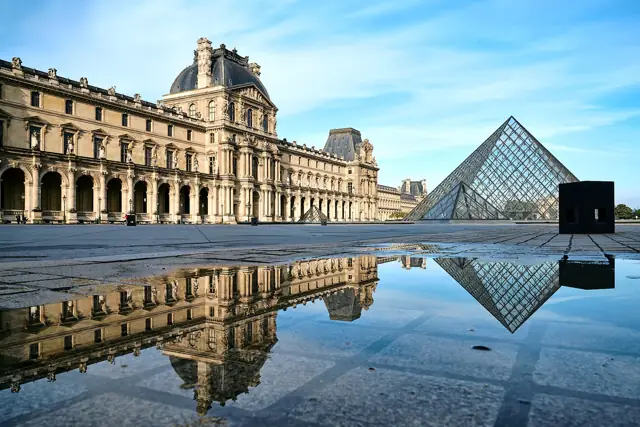
Louvre
The world's most visited museum, home to the Mona Lisa, the Venus de Milo and thousands of years of art in a former…
 Landmark
Mont-Saint-Michel
A medieval abbey crowning a rocky tidal island off the Normandy coast, Mont-Saint-Michel is one of the most…
 Landmark
Palace of Versailles
Louis XIV's dazzling palace, with the Hall of Mirrors, vast formal gardens and Marie Antoinette's estate, is the most…
Nice & Côte d'Azur on the map
Frequently asked questions
How many days do you need in Nice?
Two days covers the old town, the seafront, Castle Hill and a museum. Allow four or five days if you want to add day trips to Monaco, Èze, Antibes and Cannes.
How do I get from Nice airport to the city centre?
Take tram line 2 from either terminal to the city centre or the port, which takes around 25-30 minutes. An airport return ticket costs €10 (2026), or you can use a standard ticket on a rechargeable card.
Are the beaches in Nice sandy?
No, Nice's beaches are made of smooth grey pebbles. Water shoes and a cushioned mat help, or rent a lounger at a private beach club. For sand, head to Juan-les-Pins or Villefranche.
Can you visit Monaco from Nice?
Yes, easily. Trains run frequently along the coast and take around 20-25 minutes, and buses are also available. Monaco is a separate country but has open borders with France, so there are no passport checks.
Written by
Emma City breaks & deals editor
Emma plans city breaks the way other people plan the weekly shop: on a budget, with a spreadsheet and a backup plan. She covers city guides and deal-hunting.
More from EmmaWe research every guide carefully, but prices, opening times and timetables change. Check them shortly before you travel. Links to our booking partners are affiliate links.